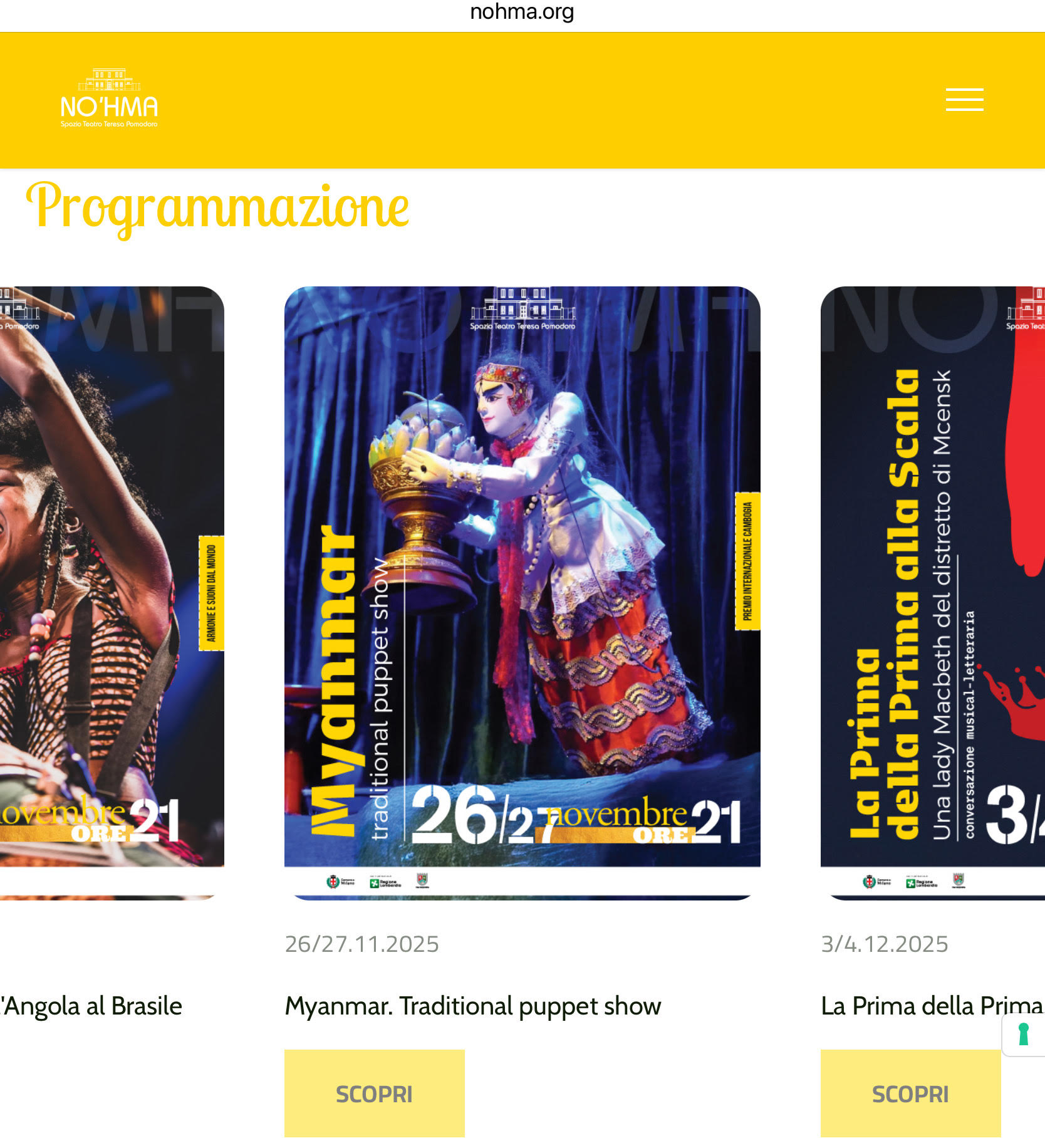
Program Items of Myanmar Traditional Puppet
Created by HOMM on Sun, 08/14/2011 - 00:53
Ritual Dance of Nat-ga-daw or Spirit Votaress or Spirit Medium
The “Curtain-raiser” which is in fact the first stock-scene of a puppet show is the “Ritual Dance of the Nat-ga-daw”. This dance is presented to propitiate the Tha-gya-min (King of the Celestial Beings), the famous pantheon of thirty-seven Nats or Spirits, the La-maing Nat or the patron goddess of the theatre and all the “powers-that-be” in order for the puppeteers and the musicians to perform most artistically and free from all disturbances.
The Group Dance of the Handmaidens immediately follows the Ritual Dance of the Nat-ga-daw.
U Min Kyaw is one of the famous pantheon of thirty-seven Nats or Spirits, is fond of drinking and merry-making. The Dance of U Min Kyaw is very lively and spirited. The music is equally lively.
Himalaya Forest Scene
In the first session of a puppet show, another stock-scene known as the Himalaya Forest Scene which depicts some aspects relating to the formation of the world immediately follows the Group Dance of Nats or Spirits. The Himalaya Forest Scene also provides incidental amusement for the young children.
Dance of the Horse
At the foot of the Himalaya Mountains, there existed the mythical forest of the same name. No human beings except the natural and mythical animals or beings inhabited the forest.
![]()
The first to appear is the horse. According to the Myanmar belief, Asvani (A-thar-wani), the constellation of stars shaped like a horse’s head, was the first creation of the universe. Hence, the dance of the horse.
Dance of the Galon-Naga
Sometimes, not only the dances of the puppetcharacters, but also the fights between them are presented to amuse the young children.
Thus, the Galon-bird or Garuda and the Naga-serpent or Dragon appear in the Himalaya Forest Scene. They dance and then they fight.
Dance of the Monkeys
The next animal to appear in the Himalaya Forest Scene is the monkey up to his usual tricks. He dances to his special tune.
It was not recorded when the stylized form of Hanuman of the Ramayana first appeared on the puppet stage as an ordinary monkey.
Dance of the Demons or Ogres
The dance of the two Balu or demons follows the dance of the monkeys.
The demon with a pointed head-gear and in the red costume is the royal being (Nan-balu) whereas the one with a plumed head-dress and in the green costume is the forest dweller (Taw-balu).
Dance of the Alchemist
The Himalaya Forest Scene is drawn to a conclusion by the dance of the Zawgyi or Sorcerer or Theurgist. He attained supernatural powers by practicing the art of alchemy.
He is endowed with the supernatural powers such as flying through the sky, travelling beneath the earth and oceans, transforming fruits of a certain type of tree into beautiful maidens with whom he likes to dally, and with his magic wand, causing death to the living and resurrection to the death. The fruit maidens, after seven days of their existence, just disappear into the thin air.
Dance of the Keinera Couple
Keineras are half human, half bird mythical creatures. In Myanmar terminology, "Keinna-ja" is male and "Kein-na-ji" is female.
According to a legend, a couple of Keineras were separated by storm only for a night but they wept for five hundred years. They fly, they land on the earth and then they dance.
Deer Chasing Dance (Excerpt from the Ramayana Grand Drama)
In this dance sequence, excerpted from the Ramayana Drama, Dasagiri or Rawana, the demon king of Lanka and Gambi, his sister appear dancing. At the persuasion of Dasagiri, the Gambi transforms into a golden deer to entice Thida or Sita.
Rama, Sita and Lakhana or Lakshman appear dancing, Sita spies the golden deer and begs Rama to chase the animal for her as she wants to keep it as her pet. Rama gives chase to the golden deer leaving Sita and Lakshman behind. The golden deer lures Rama deep into the forest.
Duet Dance of Male and Female Dancers or the Prince and the Princess
(The Two Lovers on a sylvan journey)
In the past, princes were sent to Tek-ka-thi-la, the city of learning to be educated. When they were pronounced by their teachers as perfect in knowledge, they return to their respective kingdoms. Sometimes, the teachers offered their daughters in marriage to the princes. On their return journeys, they had to pass through forests and jungles.
The princes, their consorts and their servitors or jesters sing, dance and make humorous speeches to cheer their way. Thus, a stock-scene known as "Myaing-hta" which means "Two Lovers in a Forest" was born of the old theatricals of the past. In this scene, the prince and his consort also plight their troth.
Dance of the Royal Page Boys
In real life, the royal page boys are the sons of minor princes, princesses and courtiers.
With their perpetually pointed fore fingers, they announce the arrival of the king and they urge the courtiers to occupy their respective places.
The traditional Jataka play “Thaw-ti-thay-na Tham-bu-la”
A short version of the traditional Jataka play Thaw-ti -thay-na Tham-bu-la. This is a story of the Prince “Thawtithayna” who caught leprosy and was exiled to the forest. His wife Princess “Thambula” went along to look after him.


One day while she was collecting fruits for him, an ogress attacked her so she was late coming home. He accused her of meeting another man. She swore to the King of Celestial that she was always faithful and if she was telling the truth, may her husband be cured. Through the truthfulness of her vow the prince was cured.
Duet Comic Dance of Bachelor U Shwe Yoe and Spinster Daw Moe accompanied with musicians (do-bat-waing)
No religious procession is considered complete without the dances of U Shwe Yoe and Daw Moe, especially in rural areas.
They dance to the accompaniment of the players or musicians of the Ozi or long drum, Nhai or oboe, Ra-gwin or cymbals and War-Lek-Koke or bamboo clappers.
U Shwe Yoe and Daw Moe are the two comic characters. They sing, they dance, they flirt and they make the spectators' laugh.